Our History
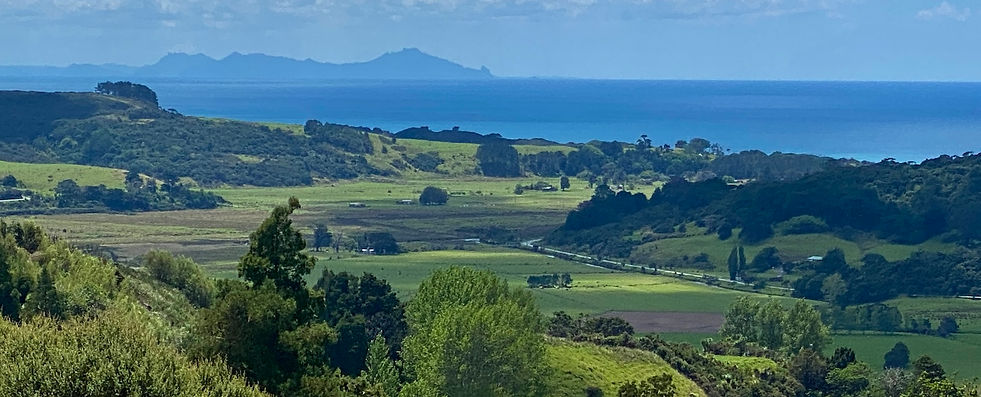
In the early 1990s, along a rugged stretch of New Zealand's coastline, two visionaries gazed upon what others saw as merely a failed farm. Where some perceived barren struggle, Phil Martin and Laurie Foster envisioned paradise—a sanctuary where native birds would one day return in abundance. It was Laurie who christened this dream "Manunui," meaning "many birds" in Māori, a prophetic name that would later prove remarkably fitting.
Their journey began with a partnership forged in adventure—initially as co-owners of a boat—and would evolve into a three-decade odyssey of determination that weathered both financial storms and literal tempests. What followed was not a simple tale of purchase and development, but an epic saga of perseverance against formidable odds.
The Battle Begins
The land that would become Manunui was shrouded in complications. Neighbouring landowner Alexander Longuet-Higgins possessed 2,000 acres stretching to Matakana Valley Road, including the quarry. A complex web of interested parties formed—property developers, lawyers, and entrepreneurial council workers—all circling the potential of this coastal treasure.
It wasn't until December 2001, after years of negotiations and financial manoeuvring, that Phil and Laurie finally claimed stewardship of Manunui. Their partnership had taken bold action: placing a struggling company into receivership, purchasing a mortgage, negotiating with neighbours, and emerging as the sole bidders for the precious land.
Reclaiming the Wild
The new guardians of Manunui faced a land in ecological distress. Free-grazing livestock trampled the grounds, while a plague goats had decimated the undergrowth beneath the tree canopy. Nature's balance had been lost.
Phil and Laurie were doing what they could to control the goats - repairing fences when they broke through, and shooting half a dozen of them. But Auckland City Council came to the rescue when they decided to cull the goats from Mt Tumahunga in preparation for releasing the Kiwis - the professionals shot about 2,000!
Once this threat was neutralised, they embarked on what would become their greatest legacy—an ambitious restoration program that would eventually see more than 100,000 native plants take root in Manunui's soil. Where once there was barren ground, a haven for wildlife would emerge.
The Road Less Travelled
Following what they thought was expert advice, Phil and Laurie committed to building a road that would serve the entire development—a decision that seemed straightforward but would prove anything but. Local politics intervened when a councillor rallied opposition, resulting in their application being publicly notified and ultimately rejected.
Undaunted, Phil and Laurie fought back with the tenacity of those who believe in their cause. They engaged environmental lawyer Kit Littlejohn and mounted a two-pronged legal offensive—challenging the Council in the High Court while simultaneously appealing through the Environment Court.
Victory finally came in 2003 when consent for the road and four titles was granted. Engineers were engaged, HEB Construction Company broke ground for the road. Around this time, they had the property fully fenced. Water and underground power infrastructure followed, bringing modern conveniences to this wild paradise.
Trial by Fire and Water
The decade that followed tested the resolve of even these stalwart dreamers. Geotechnical miscalculations led to a $300,000 overrun on culvert construction. The road, expected to be a swift project, consumed nearly two years. Financial mismanagement by their property developer damaged their reputation in the local community.
Just as they prepared to sell the first titles in 2007, the Global Financial Crisis struck, evaporating the property market. Nature itself seemed to conspire against them when their first major "open home" coincided with a tremendous storm that rendered the newly built road impassable with mud.
In 2011, the saga took a darker turn when Phil suffered severe burns in a terrible accident, requiring rescue by helicopter. This personal tragedy might have broken lesser spirits, but for the guardians of Manunui, it was merely another obstacle to overcome.
Family sacrifices
The financial burden of their dream demanded extraordinary commitment. Both Phil and Laurie sold their family homes to fund the ongoing development, moving their families into rented accommodation. Phil parted with his dental practice, while Laurie sold a commercial property. Never once did they waiver in their belief in the Coastal Estate dream.
Legacy Rising
Slowly, methodically, they worked through the complex process of securing consents and creating individual titles. By 2017, their persistence began to bear fruit as new members of the Manunui community started arriving, building homes, and settling into the paradise that Phil and Laurie had envisioned decades earlier.
Today, where once there was a degraded landscape, stands a thriving coastal estate. The undergrowth has returned, sheltering countless native species. The name "Manunui"—many birds—has fulfilled its promise as winged inhabitants have reclaimed their territory.
What began as two men's dream has evolved into a community where families create memories against the backdrop of regenerated native bush. The gate that had was built to deter trespassing longboarders now welcomes residents and visitors to a sanctuary created through vision, sacrifice, and unyielding determination.
The story of Manunui is not merely one of property development—it is a testament to environmental stewardship, to the power of partnership, and to the extraordinary impact of those who refuse to abandon their dreams, no matter how formidable the challenges that stand in their way.